
The Application Asks Who Owns the Car
The online quote form opens with three questions: who owns the vehicle, where it's garaged overnight, and whose name is on the title. A new driver borrowing a parent's car, driving a vehicle titled to a spouse, or using a car registered to a household member hits a structural fork here. The form assumes the person buying the policy owns the car. When that assumption breaks, the application either dead-ends or routes to a product that doesn't fit.
Most new drivers frame this as a coverage question: can I insure a car I don't own? The structural reality is different. Insurance follows the vehicle and its titled owner, not the person behind the wheel. A new driver using someone else's car regularly doesn't need to insure the car separately. They need to be listed as a driver on the owner's existing policy. The carrier prices the vehicle's risk through the owner's policy and rates the new driver as an additional exposure on that policy. Buying a standalone policy in your own name when you don't own the car creates two problems: the carrier underwrites a vehicle you have no insurable interest in, and the owner's policy now has an unlisted regular driver, which is a coverage gap.
Compare car insurance rates in your state
Get quotes from licensed carriers — no obligation, no spam, results in minutes.
Get Your Free QuoteCarriers Offering Online Quoting
17
Seventeen of 34 national carriers allow direct online quoting without an agent. The rest require phone contact or broker access. For a new driver navigating named-driver addition versus standalone coverage, knowing which carriers offer self-service matters: agent-routed carriers can clarify the titled-owner question before the application breaks.
Named Driver Versus Policyholder
A policyholder is the person who buys the insurance contract, pays the premium, and holds legal responsibility for maintaining coverage. A named driver is someone listed on that policy as an authorized regular user of the insured vehicle. The two roles are not interchangeable. A new driver using a parent's car is added to the parent's policy as a named driver. The parent remains the policyholder. The vehicle stays insured under the parent's contract. The carrier rates the new driver's risk and adjusts the premium, but the policy structure doesn't change.
Buying a standalone policy in your own name makes you the policyholder. That path works when you own the vehicle, hold the title, and garage it at your own address. It breaks when the car belongs to someone else. Carriers require insurable interest: you can only insure property you own or have a financial stake in. A new driver who doesn't own the car, isn't on the title, and doesn't live at the garaging address has no insurable interest. The application will either reject the vehicle or bind a policy that won't pay a claim because the insured has no legal relationship to the property.
The structural test is simple. If the vehicle is titled to someone else and garaged at their address, you belong on their policy as a named driver. If the vehicle is titled to you and garaged where you live, you need your own policy as the policyholder. The carrier's underwriting logic follows title and garaging address, not whose name appears on the insurance card.
Insurable interest is the blocker. You can only insure a vehicle you own, co-own, or have a financial stake in. A new driver using someone else's car has no insurable interest and cannot be the policyholder on that vehicle.
When Named-Driver Addition Works
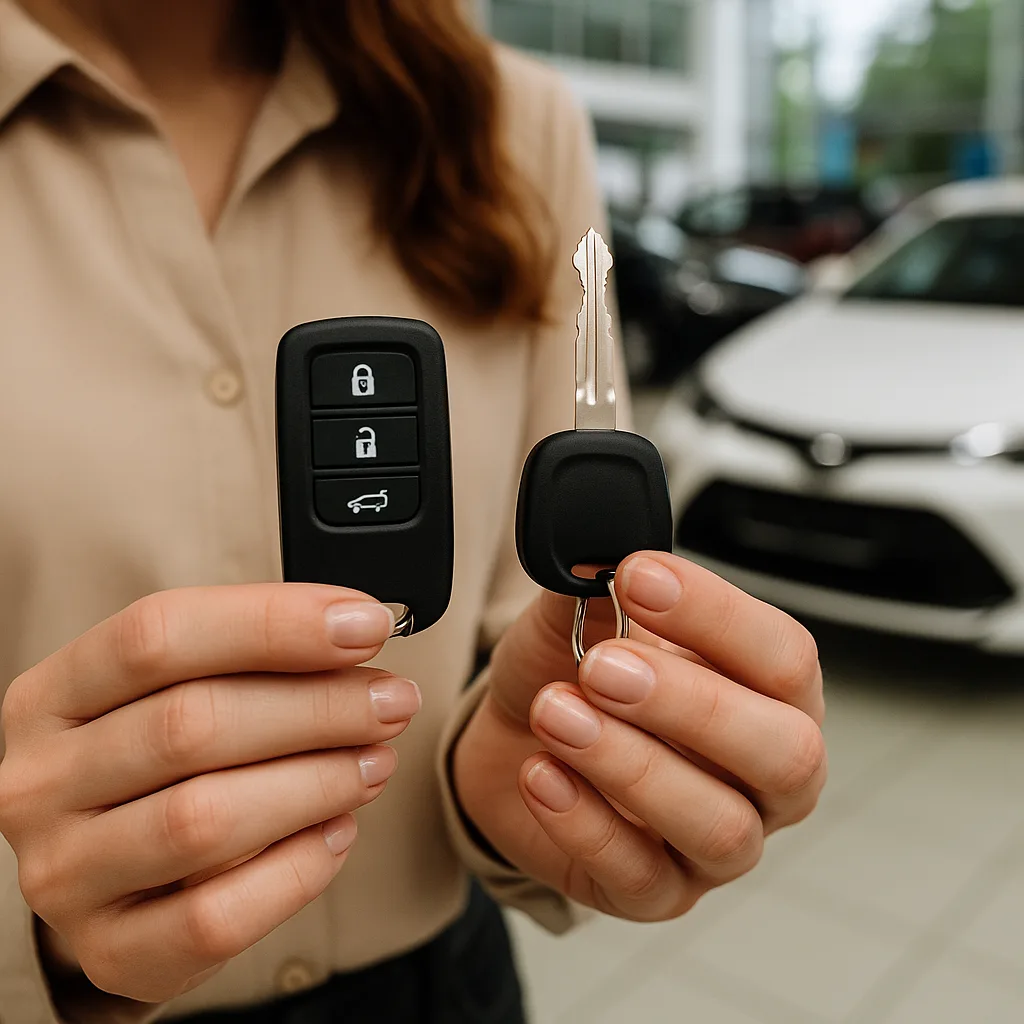
The most common scenario is a new driver living with parents and using a household vehicle. The car is titled to the parent, garaged at the parent's address, and the parent holds the existing auto policy. The new driver is added to that policy by name. The carrier rates the new driver's age, licensing stage, and lack of driving history, then adjusts the household premium. The vehicle remains insured under the parent's contract. The new driver is covered as a listed operator. No separate policy is needed, and attempting to buy one creates the insurable-interest problem.
The same structure applies to a spouse using a vehicle titled to the other spouse, or an adult child using a car titled to and garaged at a parent's address while living there. The key is household membership and regular use. If the new driver lives at the address where the car is garaged and uses it regularly, they must be listed on the owner's policy. Carriers define regular use as more than occasional borrowing. Driving the car to work, school, or errands multiple times per week qualifies. The owner's policy without the new driver listed is a material misrepresentation, and a claim involving the unlisted driver can be denied.
Related Articles





When a Standalone Policy Is Required
A standalone policy becomes necessary when the new driver owns the vehicle outright, holds the title in their name, and garages it at their own address separate from the previous policyholder. This is the structural position of a new driver who has moved out, bought their own car, and no longer lives where the household policy covers. The vehicle is now the new driver's property. The carrier requires proof of ownership: the title, registration, and garaging address all match the new policyholder's name and location.
The application process for a standalone first policy breaks at two points. The first is proof of prior coverage. Carriers design the form for drivers switching from another policy, and the system expects a prior policy number and expiration date. A new driver has no prior policy. The workaround is selecting the no-prior-coverage option, which some carriers bury, or providing a named-driver letter from the household policy showing continuous coverage as a listed driver. The second break is the license-date field. Entering the permit issue date versus the full-license issue date changes the underwriting path. Most carriers want the full-license date, but some accept the permit date if supervised hours are documented.
The cost difference is significant. Adding an 18-year-old new driver to a parent's policy raises the household premium by roughly 128% to 158%, but the base premium is shared across all household vehicles and drivers. A standalone policy for the same driver runs higher in absolute dollars because the new driver is now the sole rated risk on the contract. The national range for a first-time driver on a standalone policy is roughly $411 to $609 per month, compared to the roughly $223 per month an experienced driver pays. The gap narrows as the new driver accumulates claim-free years, but it starts wide.
Household Premium Increase Adding Teen Driver
128–158%
Adding a 16-year-old new driver to a parent's full-coverage policy raises the household premium by 128% to 158%. The percentage is large, but the base is shared across the household's vehicles and existing drivers, which keeps the absolute-dollar increase lower than a standalone policy for the same driver.
Bankrate 2025, MoneyGeek 2026
Co-Ownership and Non-Household Scenarios
Co-ownership creates a hybrid structure. If the vehicle title lists both the new driver and another person, both have insurable interest. The policy can be held by either party, or both can be named as co-policyholders. Carriers handle this differently. Some require the primary titleholder to be the primary named insured. Others allow either co-owner to hold the policy as long as both are listed. The key is that both names on the title must appear on the policy. An unlisted co-owner is a coverage gap.
A new driver living separately from the vehicle owner but using the car regularly faces a garaging-address problem. The carrier prices the policy based on where the car is kept overnight, not where the driver lives. If the new driver takes the car to a different city for college and garages it there, the policy's garaging address must be updated to reflect the actual location. Leaving it listed at the parent's address when the car is garaged elsewhere is a material misrepresentation. Some carriers allow a temporary address change for a student. Others require a separate policy if the car is garaged away from the policyholder's address for more than a certain period, which varies by carrier.
The non-owner policy is a different product entirely. It covers a driver who does not own a vehicle but needs liability coverage to maintain continuous insurance history or satisfy a state filing requirement. It does not cover a specific vehicle. A new driver borrowing someone else's car regularly does not need a non-owner policy. They need to be listed on the owner's policy. Non-owner coverage is for drivers who use rental cars, car-sharing services, or borrowed vehicles infrequently and want liability protection that follows them rather than a specific car.
What Happens When the Structure Is Wrong
A new driver who buys a standalone policy on a car they don't own creates two failure points. The first is at binding. The carrier's underwriting system flags the insurable-interest gap: the applicant's name doesn't match the title, and the garaging address doesn't match the registration. Some carriers reject the application outright. Others bind the policy but note the discrepancy, which surfaces later. The second failure point is at claim time. If the new driver files a claim and the carrier discovers the vehicle is titled to someone else and garaged elsewhere, the claim can be denied for material misrepresentation. The policy may be voided retroactively, and the premium is not refunded.
The inverse problem is an unlisted driver on the owner's policy. A parent who removes a new driver from the household policy to avoid the rate increase, but the driver still lives at the address and uses the household cars regularly, leaves the policy exposed. If the unlisted driver has an accident, the carrier can deny the claim on the grounds that a regular household driver was not disclosed. The parent's policy is underwritten based on all household members of driving age. Failing to list one is a misrepresentation, and the coverage gap can void the entire policy, not just the unlisted driver's claim.
The correct structure is not optional. It is the only structure the carrier will honor at claim time. A new driver using someone else's car belongs on that owner's policy as a named driver. A new driver who owns their own car and garages it separately needs their own policy as the policyholder. The application's title and garaging-address questions exist to enforce this logic. Answering them accurately routes the driver to the correct product. Answering them incorrectly to bypass a rate increase or simplify the process creates a policy that won't pay when it's needed.
Compare Carriers on How They Handle New Drivers
Not all carriers handle named-driver additions the same way. Some offer online tools that let the policyholder add a driver and see the adjusted premium immediately. Others require a phone call to an agent. Seventeen of 34 national carriers offer direct online quoting, which includes the ability to add or remove drivers without agent involvement. The rest route new-driver additions through an agent or broker. For a household adding a new driver, knowing which carriers allow self-service matters. It shortens the process and makes it easier to compare the rate impact across multiple carriers before committing.
Discount availability also varies. Thirty of 34 carriers offer a good-student discount, but the depth ranges from 4% to 20% depending on the carrier. Ten carriers offer it in all 51 jurisdictions: Allstate, Amica, Farmers, Geico, Liberty Mutual, National General, Progressive, State Farm, Travelers, and USAA. A new driver maintaining a B average or higher should verify whether the carrier flags the discount and what documentation is required. Some accept a report card. Others require school verification or enrollment in an approved academic program. The discount applies to the new driver's portion of the premium, not the entire household policy, but it can reduce the absolute-dollar increase.
Start by confirming the structural path: named driver on the owner's policy, or standalone policyholder on your own titled vehicle. Then compare carriers on quote access, good-student discount availability, and whether they handle the proof-of-prior-coverage gap with a named-driver letter or require a different workaround. The right structure comes first. The rate comparison follows.