
What You're Actually Buying
You pulled your first quote and saw two numbers: full coverage at one price, liability-only at roughly half that. The form didn't explain what liability actually pays for, and the carrier assumed you already knew. Most new drivers don't.
Liability insurance pays for damage you cause to someone else's car, their medical bills, and their legal costs if they sue. It does not pay to fix your own car. If you cause an accident, liability covers the other driver. Your car sits in the driveway with a crumpled fender and no check coming. That's the structural gap liability-only creates, and it's the reason the premium is lower.
Compare car insurance rates in your state
Get quotes from licensed carriers — no obligation, no spam, results in minutes.
Get Your Free QuoteMost Common State Minimum
$25,000
Most states set their minimum property damage liability limit at $25,000 per accident. That's the floor your policy must meet to register a car, not a recommendation of what you should carry. A new SUV totals at $40,000; the minimum leaves a $15,000 gap you'd pay out of pocket.
NAIC state minimum liability data, 2023
The Two Parts of Liability Coverage
Liability splits into two pieces: bodily injury and property damage. Bodily injury pays the other driver's medical bills, lost wages, and legal fees if they sue after an accident you caused. Property damage pays to repair or replace their car and anything else you hit—a fence, a building, another parked car.
State minimums are written as three numbers: 25/50/25 means $25,000 per person for injuries, $50,000 total per accident for injuries, and $25,000 for property damage. Those are the legal floors. You can buy higher limits, and most households with real assets do. A new driver on a parent's policy usually inherits the household's liability limits; a new driver on a standalone policy starts at the minimum unless they choose otherwise.
The minimum exists because states require proof you can pay for damage you cause. It does not exist because it's adequate. A two-car accident with injuries can hit six figures in thirty seconds. The minimum covers a fraction of that, and the rest comes out of your bank account, your wages, or your future earnings if a court orders it.
Liability-only leaves your own car uninsured. If you cause the accident, your car gets fixed only if you pay for it yourself.
What Liability Does Not Cover
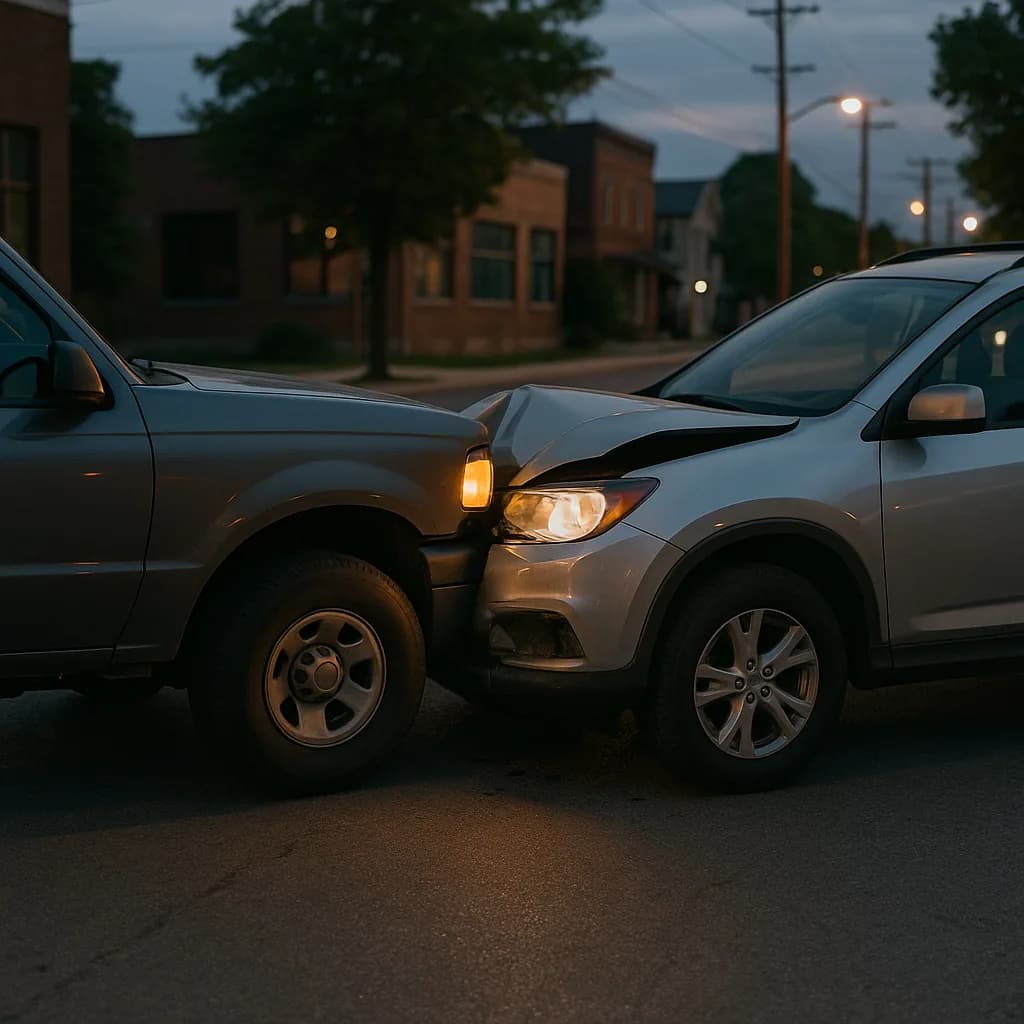
Your own car's repairs after an accident you caused: not covered. Collision coverage pays for that, and it's sold separately. Your own medical bills after an accident you caused: not covered under liability. Personal injury protection or medical payments coverage handles that, depending on your state. Damage to your car when the other driver caused the accident but has no insurance: not covered under liability. Uninsured motorist property damage covers that gap, and it's optional in most states.
Theft, vandalism, hail, hitting a deer, a tree falling on your parked car: none of those involve legal liability to another person, so liability does not apply. Comprehensive coverage pays for those, and it's also sold separately. Liability-only means exactly that: you're buying only the coverage that pays when you're at fault and someone else has a loss. Everything else is your problem.
Related Articles





When Liability-Only Makes Sense
Liability-only works when you can replace your car out of pocket without financial strain. If your car is worth $3,000 and you have $3,000 sitting in savings you wouldn't miss, liability-only is a rational choice. You're self-insuring the car and paying a carrier only to cover the other driver.
It also works when the car is old enough that collision and comprehensive premiums approach the car's actual value. Insuring a $2,500 car with full coverage that costs $1,200 a year makes no actuarial sense. You'd pay half the car's value every year to insure it, and after a total loss the carrier pays you $2,500 minus your deductible. The math breaks.
Liability-only does not work when you financed or leased the car. Lenders require collision and comprehensive as a condition of the loan because they hold the title and they're protecting their asset, not yours. The financing agreement usually specifies full coverage, and dropping it triggers a default clause. The lender will force-place coverage at a higher cost and bill you for it.
It also doesn't work when losing the car would strand you with no transportation and no cash to replace it. A totaled $8,000 car with no collision coverage and no savings leaves you walking. That's not a budget decision; it's a structural risk most households can't absorb.
Carriers Writing New Drivers
34
Thirty-four national and regional carriers write policies for drivers with no prior history. Not all offer online quoting; some route new drivers through agents or require a parent as the named insured. Comparing liability-only quotes across at least three carriers gives you the rate spread and shows which ones actually compete for this risk.
New Driver Coverage carrier roster, verified 2026
The Parent Policy vs. Standalone Decision
A new driver added to a parent's policy as a listed driver shares the household's liability limits and pays a fraction of what a standalone policy costs. The household premium rises—by roughly 128% to 158% when adding a 16-year-old—but the per-driver cost is lower than placing the same driver on their own policy. The parent's policy also carries the parent's liability limits, which are usually higher than the state minimum.
A standalone liability-only policy for a new driver runs roughly $184 to $242 per month for minimum coverage. That's the new driver carrying the full policy cost alone, with no household to spread it across. The savings come from dropping collision and comprehensive, not from the liability piece. Liability premiums don't drop much between full coverage and liability-only; the collision and comprehensive premiums are what you're shedding.
Compare Liability Limits Against Real Costs
Pull three quotes: one at your state's minimum liability limits, one at 50/100/50, and one at 100/300/100. The price difference between minimum and 50/100/50 is usually $10 to $30 per month. The difference between 50/100/50 and 100/300/100 is another $15 to $40. Those are the actual increments, and they're smaller than most new drivers expect.
Now compare those increments to the cost of the gap. A $60,000 injury claim against a $25,000 bodily injury limit leaves you personally liable for $35,000. A court judgment for that amount attaches to your wages, your bank account, and any property you acquire until it's paid. Spending an extra $20 a month to carry 100/300/100 eliminates most of that exposure. The savings from staying at the minimum aren't savings if you end up in court.
This is where the parent-versus-standalone decision shows up again. A parent's policy usually already carries 100/300/100 or higher, and adding a new driver to it means the new driver inherits those limits. A standalone policy starts wherever the new driver sets it, and starting at the minimum because it's cheaper builds in a gap the household may not be able to cover.